How to solve a 15×15 nonogram.
Work through the complete Mountain practice puzzle with 39 explained deductions. This guide reveals the picture; try the same 15×15 puzzle first if you want to solve it yourself.
Where to begin on a larger grid
Start with full lines and overlaps, then check each crossing row or column. On this puzzle, row 8 has a clue of 15, so it fills the whole row. A single run of 13 in a 15-cell line has 11 overlapping cells, but do not apply that shortcut to a clue with several groups.
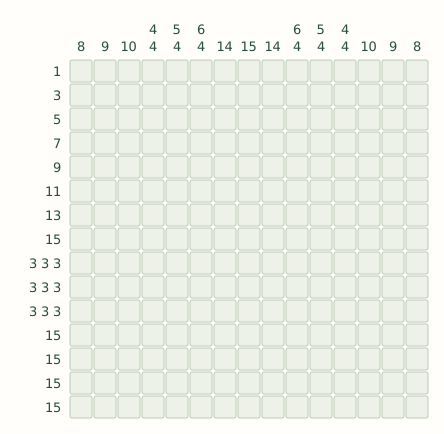
Complete step-by-step solution
Each step uses the marks from previous steps. ■ means filled, × means confirmed empty, and an unmarked light cell is unknown. Gold outlines show new marks. Expand any grid to inspect that stage.
Row 8: 15
Given the marks already made, this line has exactly one legal placement of its runs. The new cells follow from that placement.
Fill columns 1, 2, 3, 4, 5, 6, 7, 8, 9, 10, 11, 12, 13, 14, 15.
Show grid after step 1
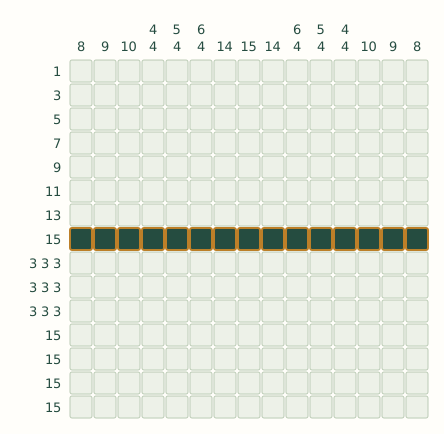
Row 12: 15
Given the marks already made, this line has exactly one legal placement of its runs. The new cells follow from that placement.
Fill columns 1, 2, 3, 4, 5, 6, 7, 8, 9, 10, 11, 12, 13, 14, 15.
Show grid after step 2
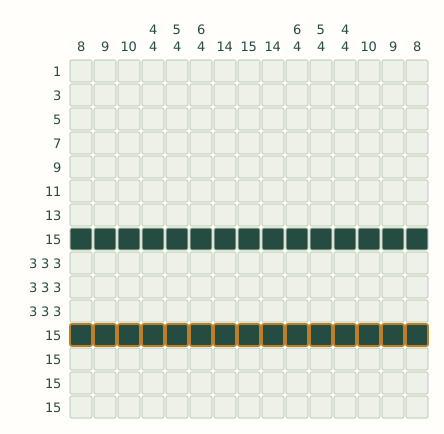
Row 13: 15
Given the marks already made, this line has exactly one legal placement of its runs. The new cells follow from that placement.
Fill columns 1, 2, 3, 4, 5, 6, 7, 8, 9, 10, 11, 12, 13, 14, 15.
Show grid after step 3
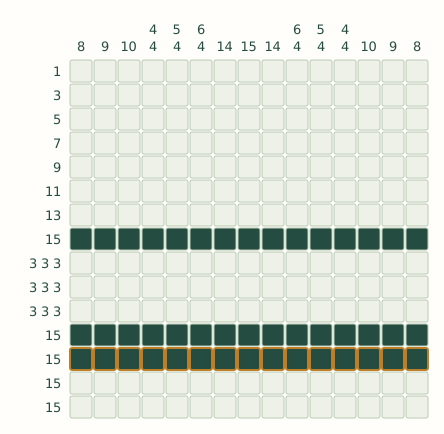
Row 14: 15
Given the marks already made, this line has exactly one legal placement of its runs. The new cells follow from that placement.
Fill columns 1, 2, 3, 4, 5, 6, 7, 8, 9, 10, 11, 12, 13, 14, 15.
Show grid after step 4
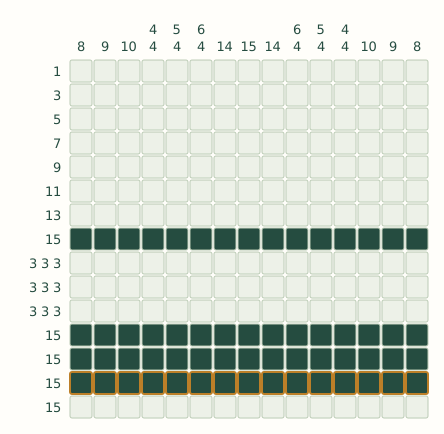
Row 15: 15
Given the marks already made, this line has exactly one legal placement of its runs. The new cells follow from that placement.
Fill columns 1, 2, 3, 4, 5, 6, 7, 8, 9, 10, 11, 12, 13, 14, 15.
Show grid after step 5
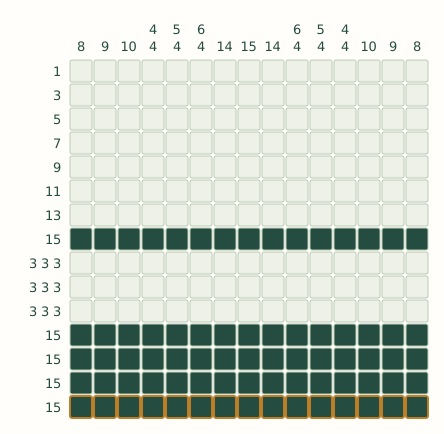
Column 1: 8
Given the marks already made, this line has exactly one legal placement of its runs. The new cells follow from that placement.
Fill rows 9, 10, 11.
Show grid after step 6
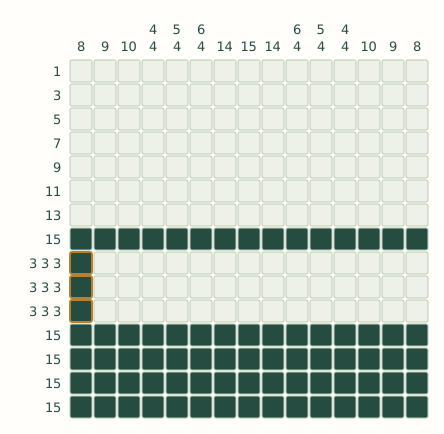
Column 2: 9
Given the marks already made, this line has exactly one legal placement of its runs. The new cells follow from that placement.
Fill rows 7, 9, 10, 11.
Show grid after step 7
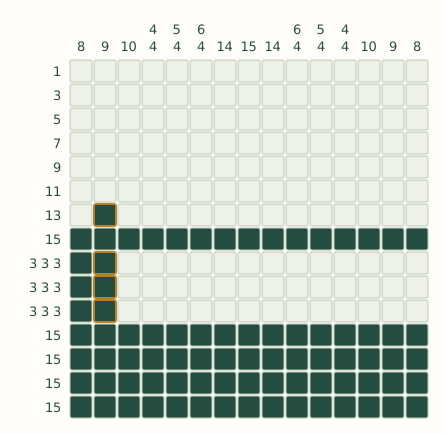
Column 3: 10
Given the marks already made, this line has exactly one legal placement of its runs. The new cells follow from that placement.
Fill rows 6, 7, 9, 10, 11.
Show grid after step 8
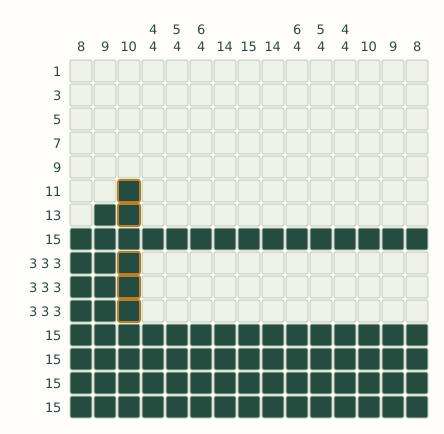
Column 7: 14
Given the marks already made, this line has exactly one legal placement of its runs. The new cells follow from that placement.
Fill rows 2, 3, 4, 5, 6, 7, 9, 10, 11.
Show grid after step 9
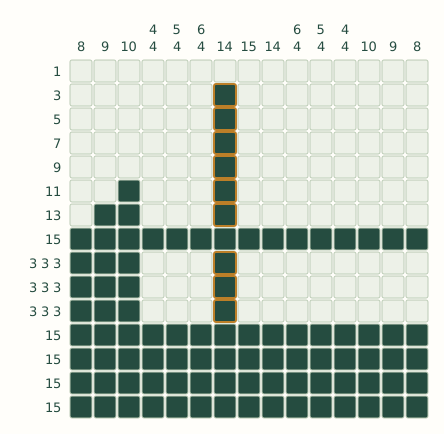
Column 8: 15
Given the marks already made, this line has exactly one legal placement of its runs. The new cells follow from that placement.
Fill rows 1, 2, 3, 4, 5, 6, 7, 9, 10, 11.
Show grid after step 10
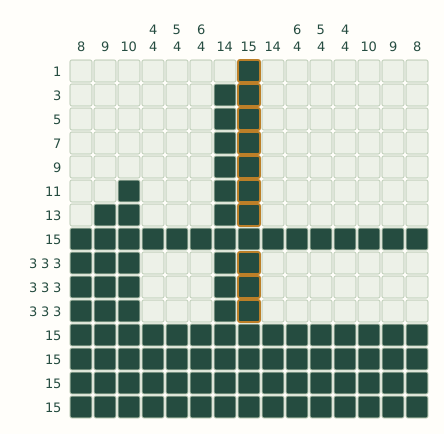
Column 9: 14
Given the marks already made, this line has exactly one legal placement of its runs. The new cells follow from that placement.
Fill rows 2, 3, 4, 5, 6, 7, 9, 10, 11.
Show grid after step 11
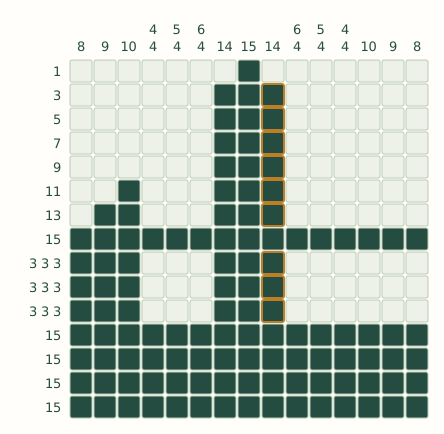
Column 13: 10
Given the marks already made, this line has exactly one legal placement of its runs. The new cells follow from that placement.
Fill rows 6.
Show grid after step 12
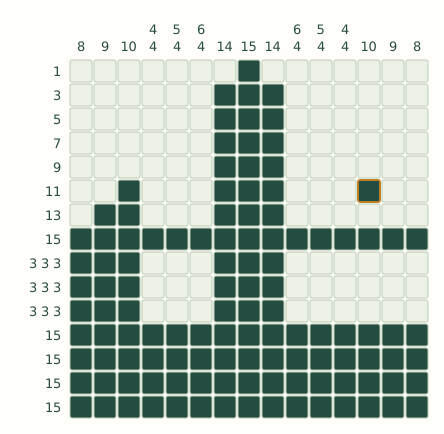
Row 6: 11
Given the marks already made, this line has exactly one legal placement of its runs. The new cells follow from that placement.
Fill columns 4, 5, 6, 10, 11, 12.
Show grid after step 13
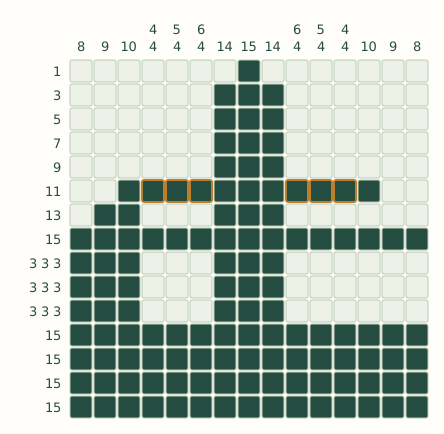
Column 13: 10
Given the marks already made, this line has exactly one legal placement of its runs. The new cells follow from that placement.
Fill rows 7, 9, 10, 11.
Show grid after step 14
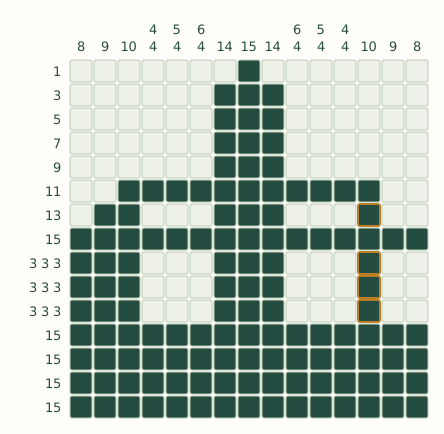
Column 14: 9
Given the marks already made, this line has exactly one legal placement of its runs. The new cells follow from that placement.
Fill rows 7.
Show grid after step 15
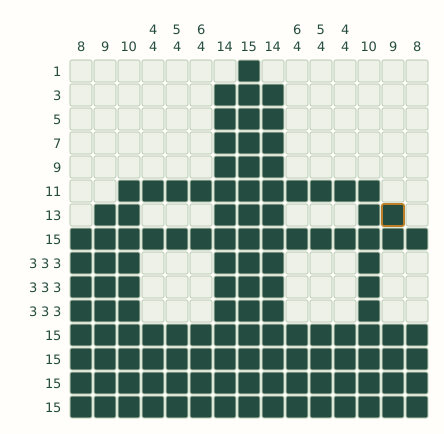
Row 7: 13
Given the marks already made, this line has exactly one legal placement of its runs. The new cells follow from that placement.
Fill columns 4, 5, 6, 10, 11, 12.
Show grid after step 16
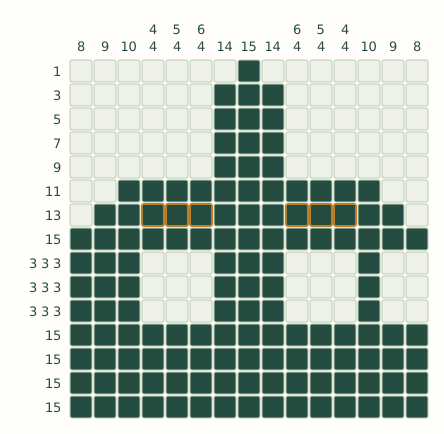
Column 14: 9
Given the marks already made, this line has exactly one legal placement of its runs. The new cells follow from that placement.
Fill rows 9, 10, 11.
Show grid after step 17
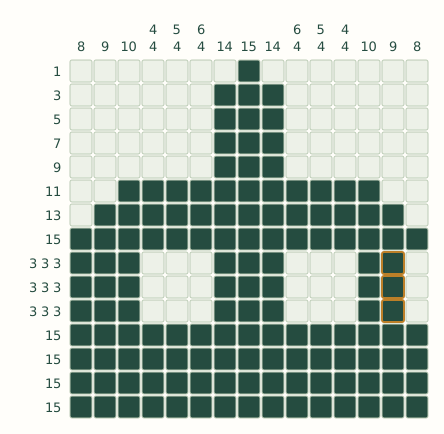
Column 15: 8
Given the marks already made, this line has exactly one legal placement of its runs. The new cells follow from that placement.
Fill rows 9, 10, 11.
Show grid after step 18
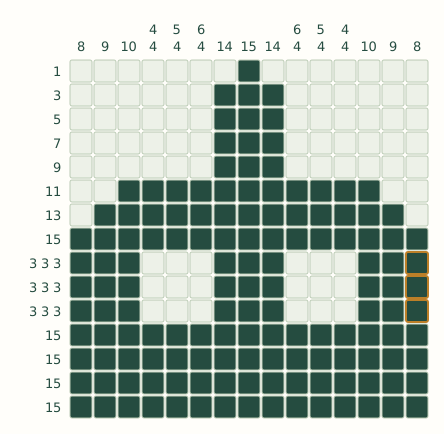
Row 1: 1
Given the marks already made, this line has exactly one legal placement of its runs. The new cells follow from that placement.
Mark columns 1, 2, 3, 4, 5, 6, 7, 9, 10, 11, 12, 13, 14, 15 empty.
Show grid after step 19
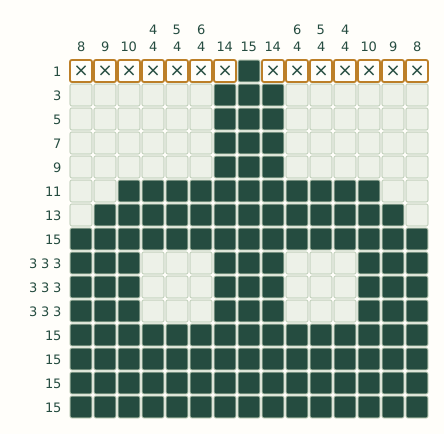
Row 2: 3
Given the marks already made, this line has exactly one legal placement of its runs. The new cells follow from that placement.
Mark columns 1, 2, 3, 4, 5, 6, 10, 11, 12, 13, 14, 15 empty.
Show grid after step 20
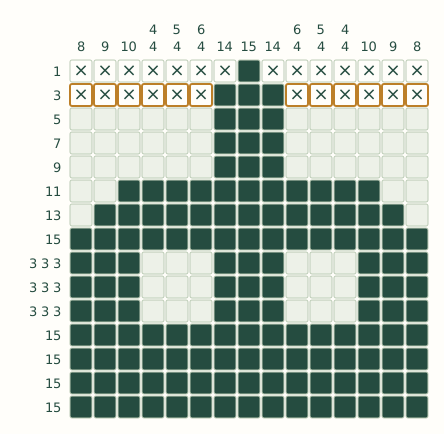
Row 6: 11
Given the marks already made, this line has exactly one legal placement of its runs. The new cells follow from that placement.
Mark columns 1, 2, 14, 15 empty.
Show grid after step 21
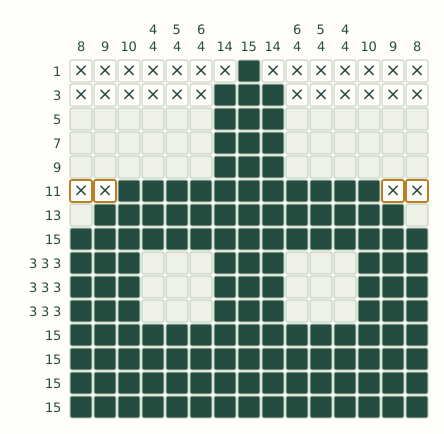
Row 7: 13
Given the marks already made, this line has exactly one legal placement of its runs. The new cells follow from that placement.
Mark columns 1, 15 empty.
Show grid after step 22
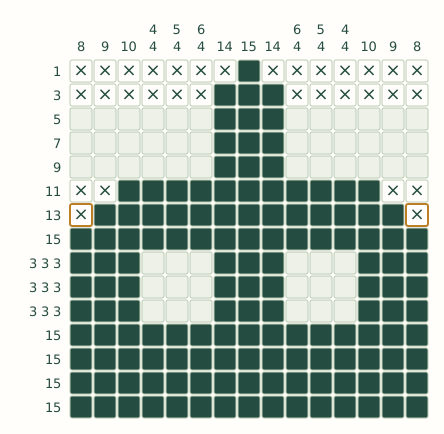
Row 9: 3, 3, 3
Given the marks already made, this line has exactly one legal placement of its runs. The new cells follow from that placement.
Mark columns 4 empty.
Show grid after step 23
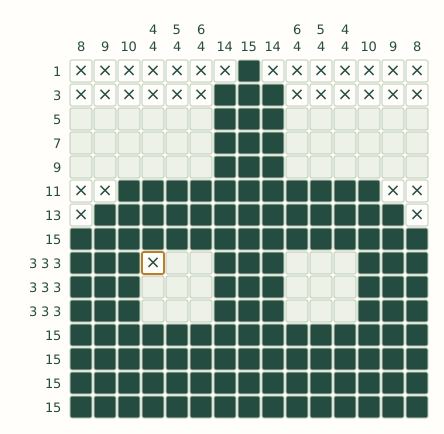
Column 4: 4, 4
Given the marks already made, this line has exactly one legal placement of its runs. The new cells follow from that placement.
Fill rows 5.
Show grid after step 24
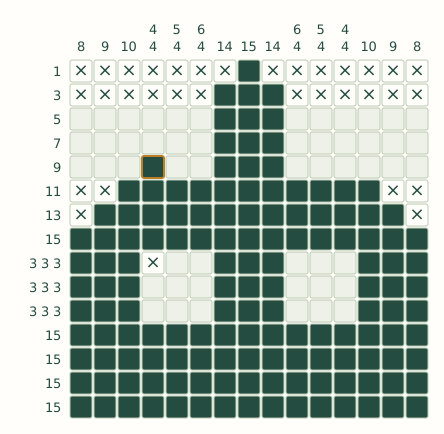
Row 9: 3, 3, 3
Given the marks already made, this line has exactly one legal placement of its runs. The new cells follow from that placement.
Mark columns 5 empty.
Show grid after step 25
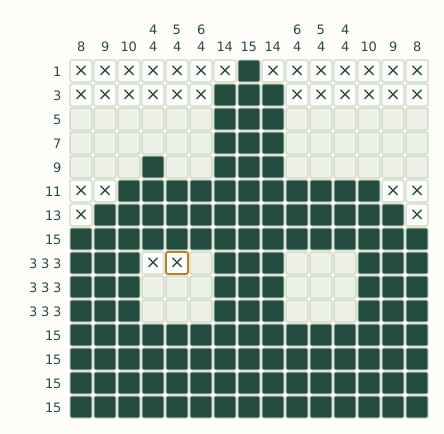
Column 5: 5, 4
Given the marks already made, this line has exactly one legal placement of its runs. The new cells follow from that placement.
Fill rows 4, 5.
Show grid after step 26
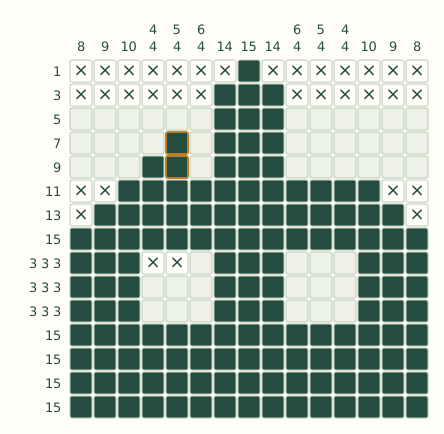
Row 9: 3, 3, 3
Given the marks already made, this line has exactly one legal placement of its runs. The new cells follow from that placement.
Mark columns 6 empty.
Show grid after step 27
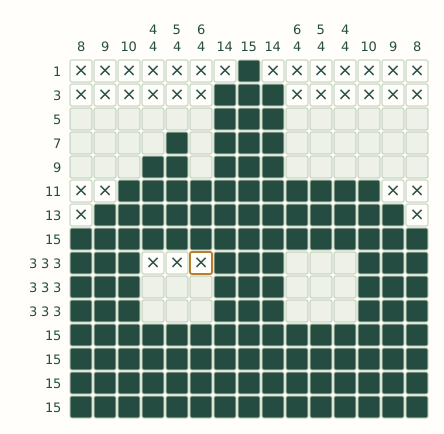
Column 6: 6, 4
Given the marks already made, this line has exactly one legal placement of its runs. The new cells follow from that placement.
Fill rows 3, 4, 5.
Show grid after step 28
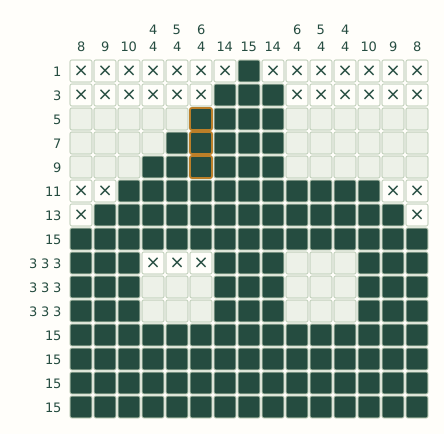
Row 9: 3, 3, 3
Given the marks already made, this line has exactly one legal placement of its runs. The new cells follow from that placement.
Mark columns 10 empty.
Show grid after step 29
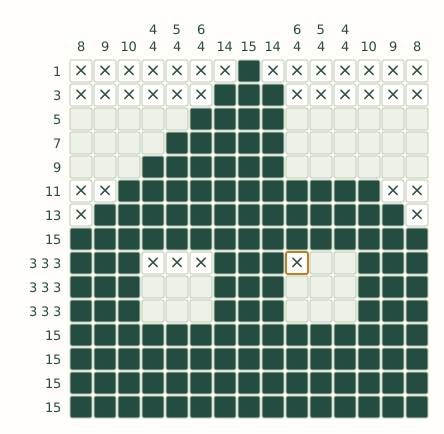
Column 10: 6, 4
Given the marks already made, this line has exactly one legal placement of its runs. The new cells follow from that placement.
Fill rows 3, 4, 5.
Show grid after step 30
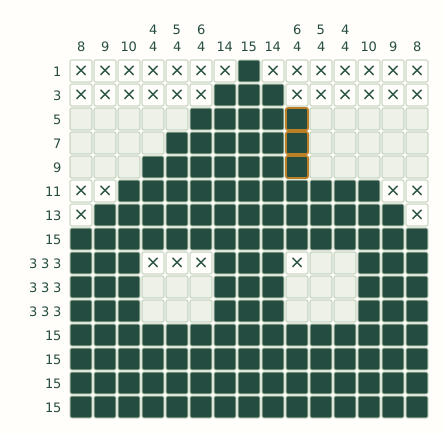
Row 3: 5
Given the marks already made, this line has exactly one legal placement of its runs. The new cells follow from that placement.
Mark columns 1, 2, 3, 4, 5, 11, 12, 13, 14, 15 empty.
Show grid after step 31
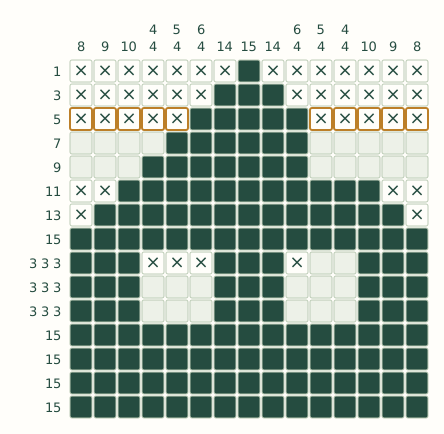
Row 9: 3, 3, 3
Given the marks already made, this line has exactly one legal placement of its runs. The new cells follow from that placement.
Mark columns 11 empty.
Show grid after step 32
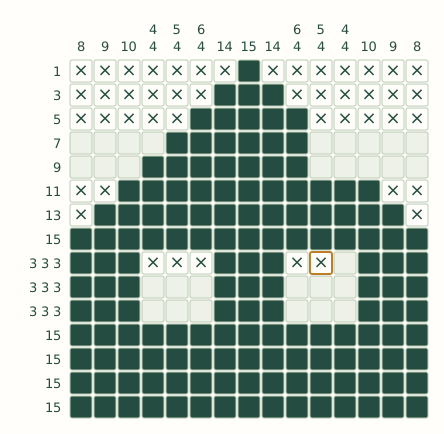
Column 11: 5, 4
Given the marks already made, this line has exactly one legal placement of its runs. The new cells follow from that placement.
Fill rows 4, 5.
Show grid after step 33
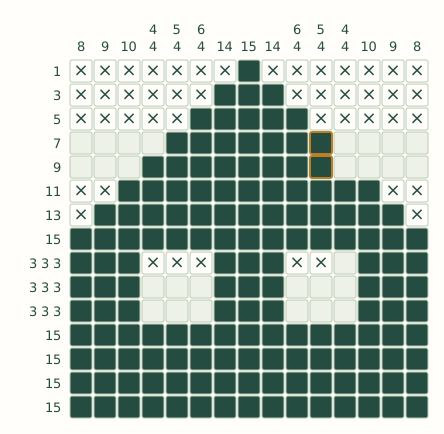
Row 4: 7
Given the marks already made, this line has exactly one legal placement of its runs. The new cells follow from that placement.
Mark columns 1, 2, 3, 4, 12, 13, 14, 15 empty.
Show grid after step 34
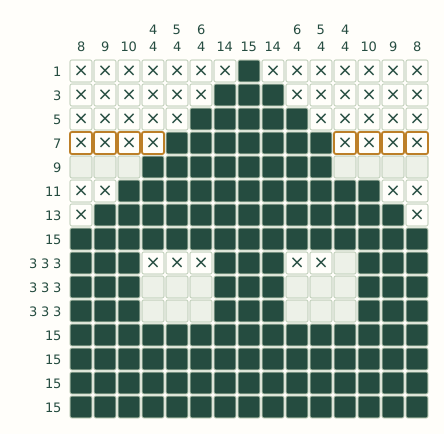
Row 9: 3, 3, 3
Given the marks already made, this line has exactly one legal placement of its runs. The new cells follow from that placement.
Mark columns 12 empty.
Show grid after step 35
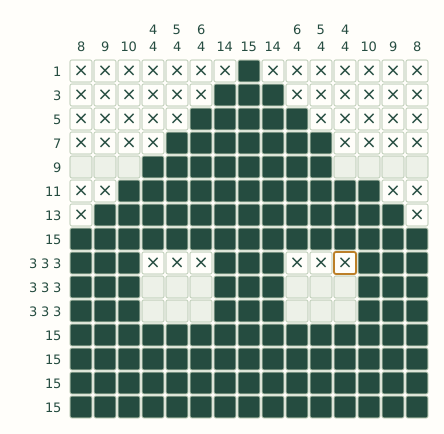
Column 12: 4, 4
Given the marks already made, this line has exactly one legal placement of its runs. The new cells follow from that placement.
Fill rows 5.
Show grid after step 36
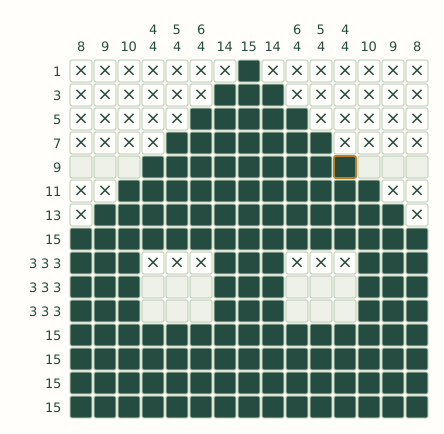
Row 5: 9
Given the marks already made, this line has exactly one legal placement of its runs. The new cells follow from that placement.
Mark columns 1, 2, 3, 13, 14, 15 empty.
Show grid after step 37
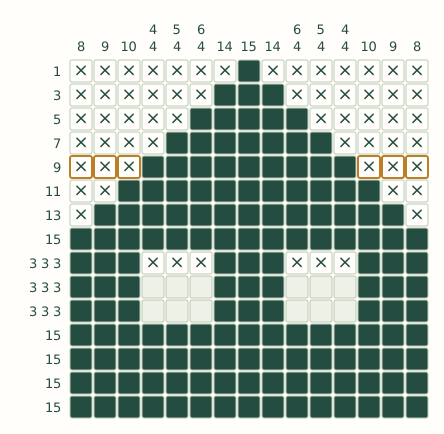
Row 10: 3, 3, 3
Given the marks already made, this line has exactly one legal placement of its runs. The new cells follow from that placement.
Mark columns 4, 5, 6, 10, 11, 12 empty.
Show grid after step 38
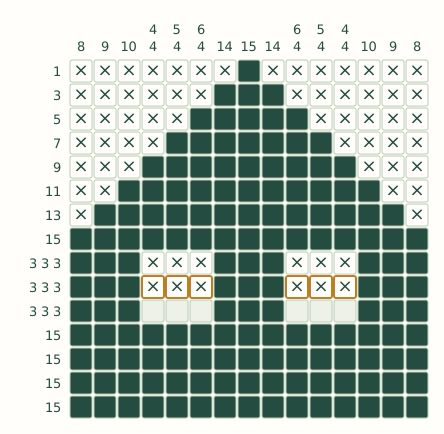
Row 11: 3, 3, 3
Given the marks already made, this line has exactly one legal placement of its runs. The new cells follow from that placement.
Mark columns 4, 5, 6, 10, 11, 12 empty.
Show grid after step 39
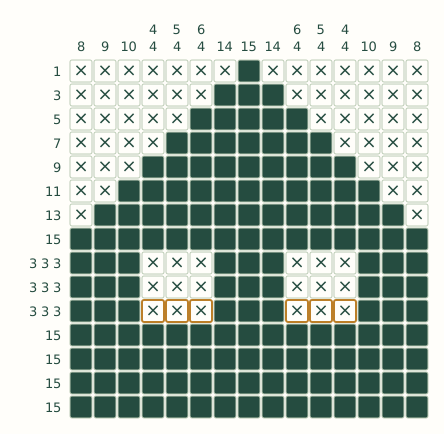
The final grid has 225 determined cells. Its row and column clues match the published puzzle.
Practise the same puzzle
Play the Mountain 15×15 nonogram ↗
Need a smaller first example? Follow the complete 5×5 solution. For the rules behind the deductions, read the Nonogram solving guide.