Daily nonogram for September 30, 2026.
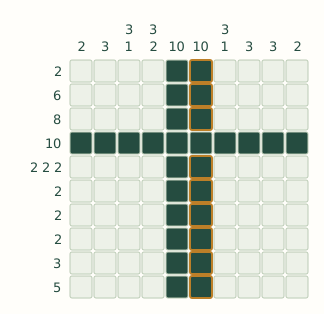
This is the shared 10×10 picture puzzle for (UTC). Play this exact daily puzzle without seeing the answer, or use the clue reference and optional solution below.
The daily puzzle changes at 00:00 UTC. These clues come from the same published date selection used by the game; progress is saved for this date in your browser.
Today's nonogram clues
| Line | Row clue | Column clue |
|---|---|---|
| 1 | 2 | 2 |
| 2 | 6 | 3 |
| 3 | 8 | 3, 1 |
| 4 | 10 | 3, 2 |
| 5 | 2, 2, 2 | 10 |
| 6 | 2 | 10 |
| 7 | 2 | 3, 1 |
| 8 | 2 | 3 |
| 9 | 3 | 3 |
| 10 | 5 | 2 |
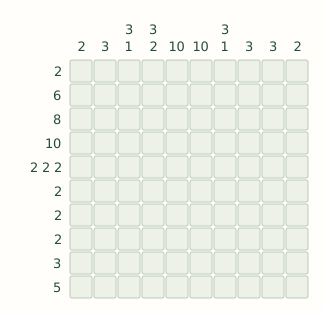
Reveal the September 30, 2026 nonogram answer and solution
Answer: Umbrella
The completed picture has 46 filled cells. This date uses the Umbrella picture from the finite daily collection; pictures can recur in rotated or reflected forms.
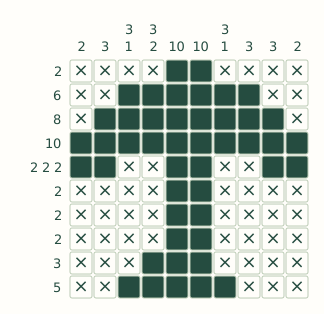
Complete step-by-step solution
Each step uses the marks from previous steps. ■ means filled, × means confirmed empty, and an unmarked light cell is unknown. Gold outlines show new marks. Expand any grid to inspect that stage.
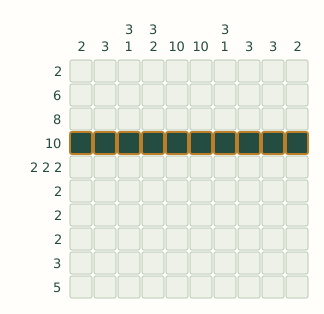
Row 4: 10
Given the marks already made, this line has exactly one legal placement of its runs. The new cells follow from that placement.
Fill columns 1, 2, 3, 4, 5, 6, 7, 8, 9, 10.
Show grid after step 1
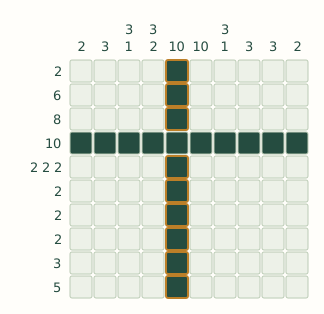
Column 5: 10
Given the marks already made, this line has exactly one legal placement of its runs. The new cells follow from that placement.
Fill rows 1, 2, 3, 5, 6, 7, 8, 9, 10.
Show grid after step 2
Column 6: 10
Given the marks already made, this line has exactly one legal placement of its runs. The new cells follow from that placement.
Fill rows 1, 2, 3, 5, 6, 7, 8, 9, 10.
Show grid after step 3
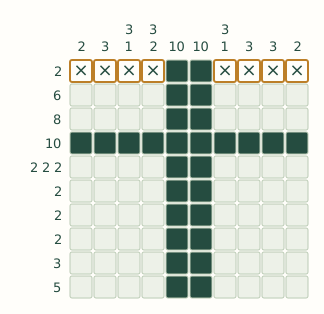
Row 1: 2
Given the marks already made, this line has exactly one legal placement of its runs. The new cells follow from that placement.
Mark columns 1, 2, 3, 4, 7, 8, 9, 10 empty.
Show grid after step 4
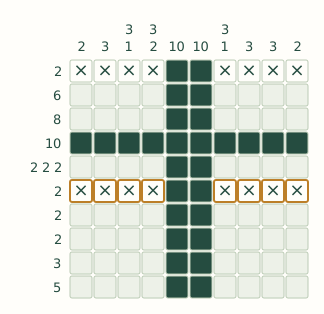
Row 6: 2
Given the marks already made, this line has exactly one legal placement of its runs. The new cells follow from that placement.
Mark columns 1, 2, 3, 4, 7, 8, 9, 10 empty.
Show grid after step 5
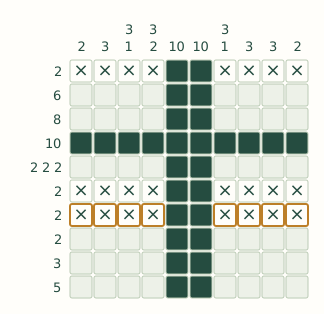
Row 7: 2
Given the marks already made, this line has exactly one legal placement of its runs. The new cells follow from that placement.
Mark columns 1, 2, 3, 4, 7, 8, 9, 10 empty.
Show grid after step 6
Row 8: 2
Given the marks already made, this line has exactly one legal placement of its runs. The new cells follow from that placement.
Mark columns 1, 2, 3, 4, 7, 8, 9, 10 empty.
Show grid after step 7
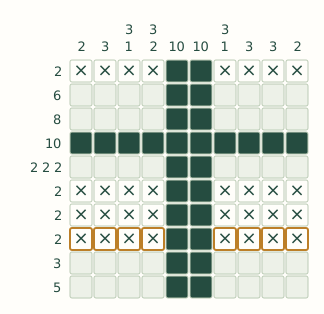
Column 2: 3
This line begins with 2 legal placements given the existing marks. Every newly marked cell has the same state in all remaining placements; other cells stay unknown.
Fill rows 3.
Show grid after step 8
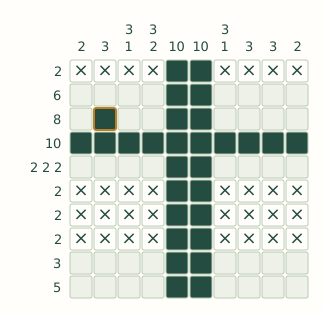
Row 3: 8
This line begins with 2 legal placements given the existing marks. Every newly marked cell has the same state in all remaining placements; other cells stay unknown.
Fill columns 3, 4, 7, 8.
Show grid after step 9
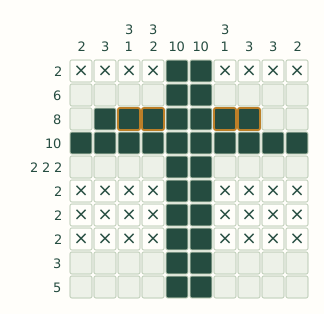
Column 4: 3, 2
This line begins with 2 legal placements given the existing marks. Every newly marked cell has the same state in all remaining placements; other cells stay unknown.
Fill rows 9.
Show grid after step 10
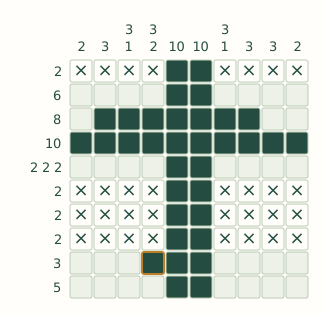
Row 9: 3
Given the marks already made, this line has exactly one legal placement of its runs. The new cells follow from that placement.
Mark columns 1, 2, 3, 7, 8, 9, 10 empty.
Show grid after step 11
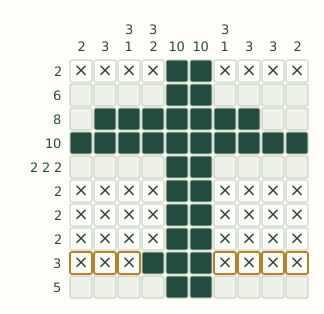
Column 3: 3, 1
This line begins with 2 legal placements given the existing marks. Every newly marked cell has the same state in all remaining placements; other cells stay unknown.
Fill rows 10.
Show grid after step 12
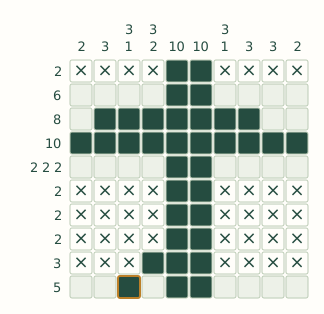
Row 10: 5
This line begins with 2 legal placements given the existing marks. Every newly marked cell has the same state in all remaining placements; other cells stay unknown.
Fill columns 4.
Show grid after step 13
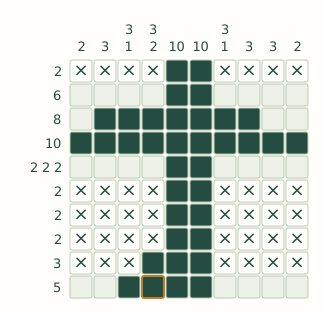
Column 7: 3, 1
This line begins with 2 legal placements given the existing marks. Every newly marked cell has the same state in all remaining placements; other cells stay unknown.
Fill rows 10.
Show grid after step 14
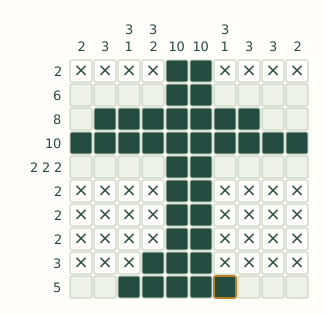
Row 10: 5
Given the marks already made, this line has exactly one legal placement of its runs. The new cells follow from that placement.
Mark columns 1, 2, 8, 9, 10 empty.
Show grid after step 15
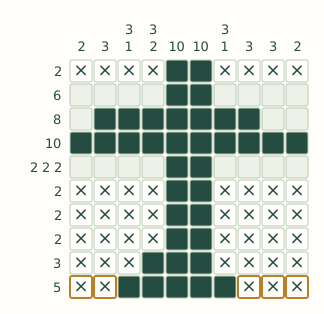
Column 9: 3
This line begins with 2 legal placements given the existing marks. Every newly marked cell has the same state in all remaining placements; other cells stay unknown.
Fill rows 3.
Show grid after step 16
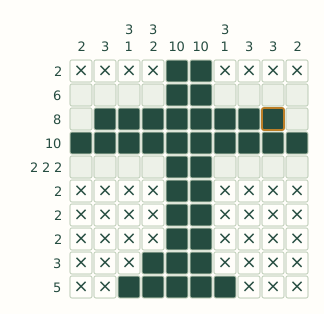
Row 3: 8
Given the marks already made, this line has exactly one legal placement of its runs. The new cells follow from that placement.
Mark columns 1 empty.
Show grid after step 17
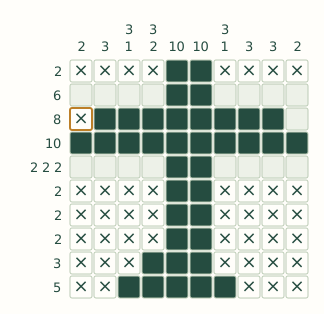
Column 1: 2
Given the marks already made, this line has exactly one legal placement of its runs. The new cells follow from that placement.
Fill rows 5.
Show grid after step 18
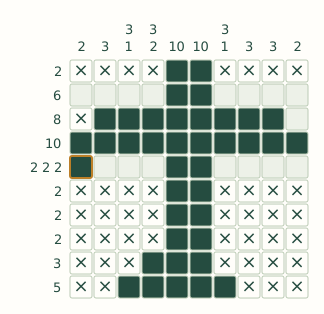
Row 3: 8
Given the marks already made, this line has exactly one legal placement of its runs. The new cells follow from that placement.
Mark columns 10 empty.
Show grid after step 19
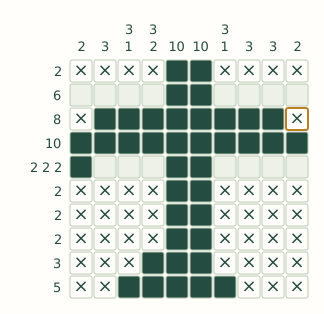
Column 10: 2
Given the marks already made, this line has exactly one legal placement of its runs. The new cells follow from that placement.
Fill rows 5.
Show grid after step 20
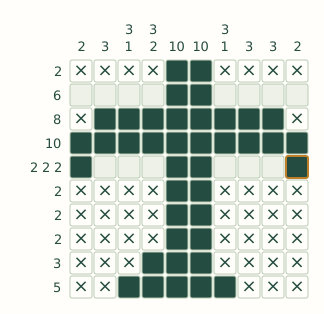
Row 5: 2, 2, 2
Given the marks already made, this line has exactly one legal placement of its runs. The new cells follow from that placement.
Fill columns 2, 9. Mark columns 3 empty.
Show grid after step 21
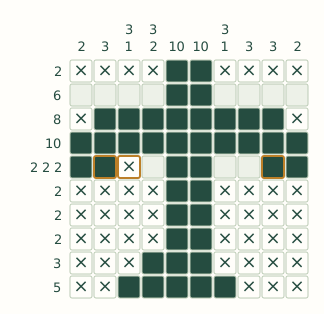
Column 3: 3, 1
Given the marks already made, this line has exactly one legal placement of its runs. The new cells follow from that placement.
Fill rows 2.
Show grid after step 22
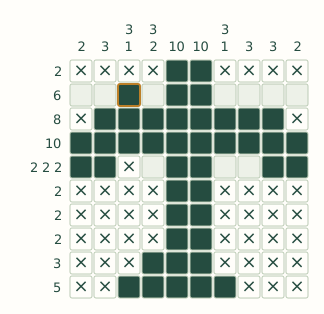
Row 5: 2, 2, 2
Given the marks already made, this line has exactly one legal placement of its runs. The new cells follow from that placement.
Mark columns 4 empty.
Show grid after step 23
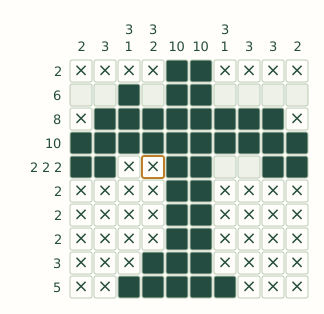
Column 4: 3, 2
Given the marks already made, this line has exactly one legal placement of its runs. The new cells follow from that placement.
Fill rows 2.
Show grid after step 24
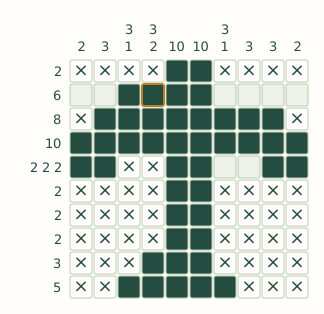
Row 5: 2, 2, 2
Given the marks already made, this line has exactly one legal placement of its runs. The new cells follow from that placement.
Mark columns 7 empty.
Show grid after step 25
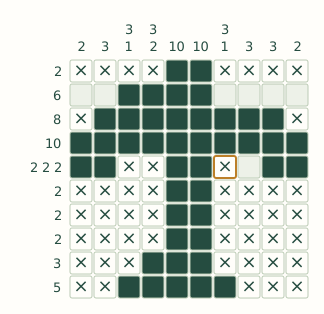
Column 7: 3, 1
Given the marks already made, this line has exactly one legal placement of its runs. The new cells follow from that placement.
Fill rows 2.
Show grid after step 26
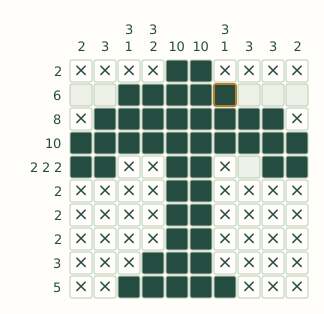
Row 5: 2, 2, 2
Given the marks already made, this line has exactly one legal placement of its runs. The new cells follow from that placement.
Mark columns 8 empty.
Show grid after step 27
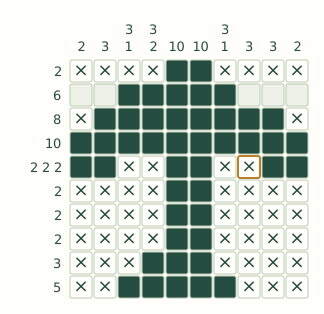
Column 8: 3
Given the marks already made, this line has exactly one legal placement of its runs. The new cells follow from that placement.
Fill rows 2.
Show grid after step 28
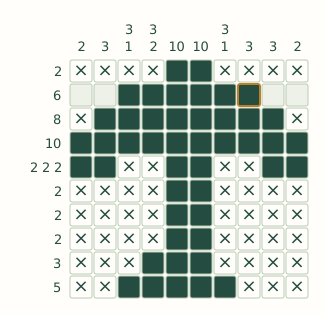
Row 2: 6
Given the marks already made, this line has exactly one legal placement of its runs. The new cells follow from that placement.
Mark columns 1, 2, 9, 10 empty.
Show grid after step 29
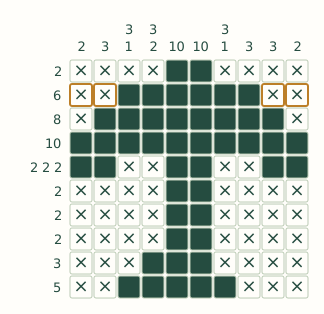
The final grid has 100 determined cells. Its row and column clues match the published puzzle.
Play September 30, 2026's puzzle · Learn with a complete 15×15 example · Read the clue rules