← All gamesARCADE / FREE ONLINE GAME

Block Hop.

Hold to compress the wooden pawn, then release to leap between floating everyday objects. After five landings, tiny targets may appear.

WHAT TO EXPECT

Is Block Hop your kind of game?

The wooden pawn flips between objects; after five landings, tiny precision targets may appear.

Good for
A tactile hold-and-release score challenge
One session
One run across floating objects until a jump misses
Controls
Press and hold Space, a button, or the game canvas; release to jump
What you use
Judge distance by eye and vary how long you charge each jump.

Good to know: This is an original game. Same-jump practice retries do not update the best score saved in this browser.

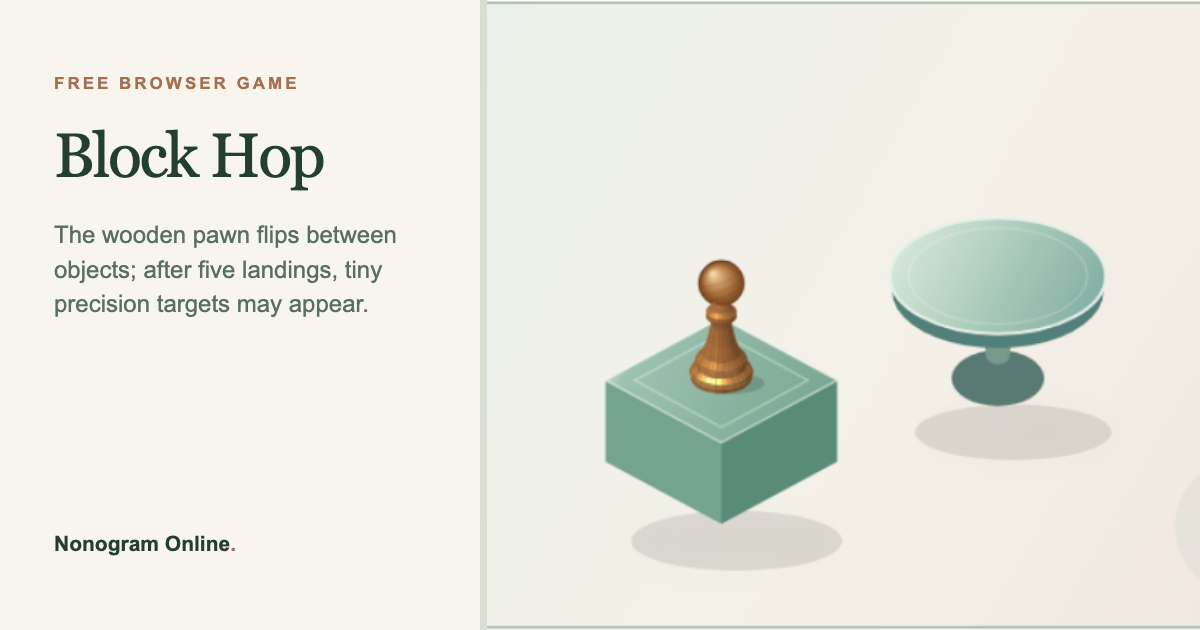
A screenshot of the Block Hop browser game
Preview of the playable Block Hop game above.
RULES & EXAMPLES

How to charge a precise jump.

Block Hop is a hold-to-jump browser game with a wooden pawn and 3D-style floating targets. Charge for distance, then aim for a center landing.

How do I control a jump?

Hold Space, press and hold the button, or hold your finger on the game canvas. The pawn squashes down as it charges. Release to leap toward the next object. Longer holds travel farther, up to one second of charge. After five successful landings, a tiny cylinder or table may appear as the next target; it is harder to land on, but remains within jump range.
How do I score?

Every safe landing earns one point. A center landing earns two points, then four, six, and more for consecutive centers, up to 32 per jump. Missing an object ends the run. You can retry that same jump in practice, where points do not update your saved best score.

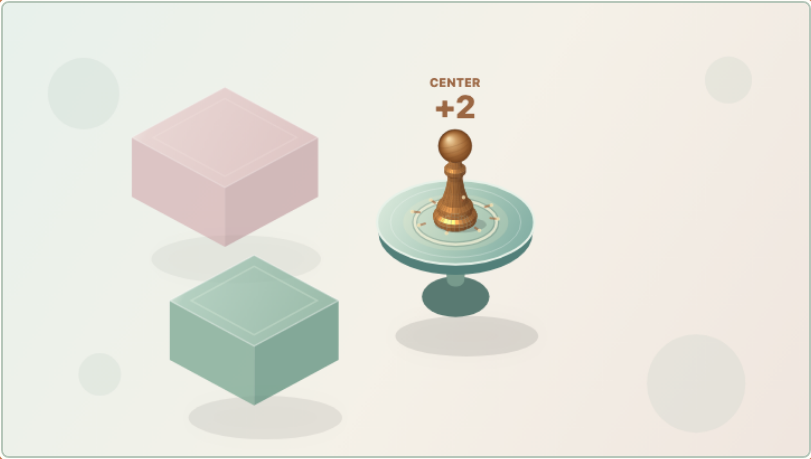
A centered landing

Hold to compress the wooden pawn, release to jump, and land near the center of the next object. A center landing earns the bonus; after five landings a tiny target may appear.

More holding is not always more distance

Charge tops out after one second, so a longer hold will not send the pawn farther. Landing outside the target ends the run; the same jump can then be retried in practice.

UNDERSTAND THE NEXT MOVE

Use a missed jump as a measurement

Hold duration controls distance, but targets vary in width as well as distance. The center is a useful reference because it leaves room on either side. A narrow target gives you less tolerance for the same timing error.

How to decide

  1. Estimate the center-to-center gap

    Compare the next target with the jump you just made. A farther target needs more charge; a narrower one needs a more precise release.

  2. Change one input after a miss

    Too short means increase the hold; too far means reduce it. Use same-jump practice so the starting object and target stay fixed while you change timing.

  3. Separate survival from the bonus

    First land safely, then refine toward the center. Consecutive center landings grow the bonus, but a safe off-center landing can preserve the run.

WORKED EXAMPLE

Refine the same jump after an undershoot

Your run ends with “Too short.” The next attempt can use exactly the same starting object and target.

Choose Retry this jump · practice
The game restores that gap. You are no longer comparing two different targets.
Hold a little longer
If the miss changes from short to long, you have passed the useful timing range. Try a duration between the two attempts.
Return to a new run
Practice points do not update your best score. Apply the timing lesson in a run, adjusting again when the next gap changes.

Common mistakes and why they matter

Holding indefinitely

Charge caps at one second. Waiting longer cannot extend the jump beyond its maximum distance.

Using one duration for every object

A center landing on a wide table does not establish the correct timing for the next tiny target. Read each gap.

Try it yourself

Practise a missed jump until you can explain whether each change was too short, safe, centered or too far. Change hold duration only; do not chase a practice score.

Return to the game and practise ↗
THE SAME TARGET, THREE OUTCOMES

See how charge changes a jump

These screenshots come from playing the first jump in the game above. A short charge, a centered charge, and a long charge produce different landing positions. Later objects vary in distance and width, so adjust your timing for each target.

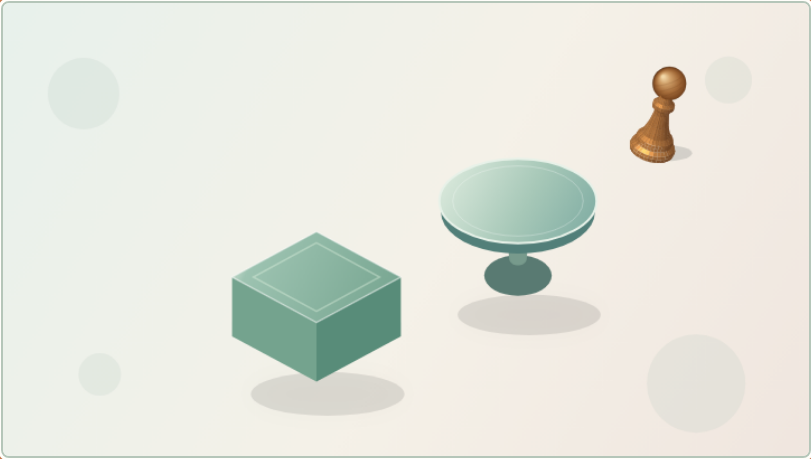
The Block Hop pawn falling short of the round table after a short charge
Not enough chargeThe pawn falls short of the first round table. The game reports “Too short.” On the same target, hold a little longer.
The Block Hop pawn standing in the center of the round table with a plus-two score
A centered landingThe pawn lands in the center of that same table. The first center landing earns 2 points; consecutive center landings increase the bonus.
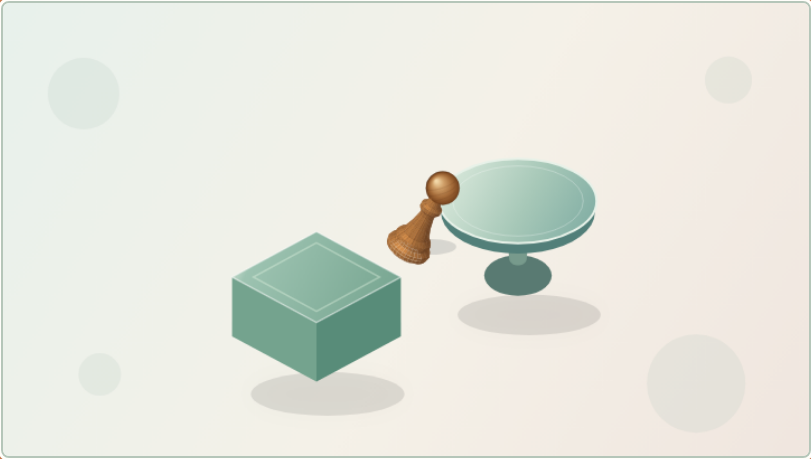
The Block Hop pawn overshooting the round table after a long charge
Too much chargeThe pawn passes beyond that same table. The game reports “Too far.” On the same target, release a little sooner.
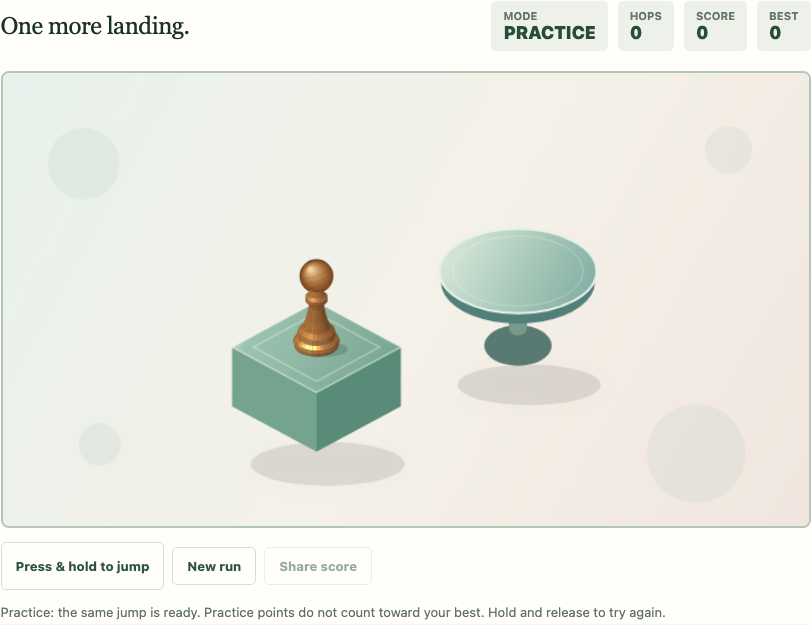
Block Hop in practice mode with the same starting block and round-table target restored
Retry the same jumpAfter a miss, choose Retry this jump · practice. The same starting object and target return. The MODE label reads PRACTICE, and practice points do not update your best score.